
Written by VERIFIED Credit Card Processing | High-Risk Payments Specialist
Kratom merchants usually focus on approval first. That makes sense. But once a business is approved, another detail starts shaping everything that happens next: the merchant category code, or MCC. This four-digit classification affects how the processor prices the account, how the bank monitors disputes, and how stable the merchant account stays when the business starts scaling.
That matters in kratom payment processing because there is no neat, universal “kratom MCC code” sitting inside the card networks. Kratom is usually pushed into broader merchant category code buckets based on how the business is presented, how the products are described, and how the underwriter interprets the risk. The wrong fit can make a merchant account look acceptable at onboarding but unstable a few months later.
If you sell kratom online, understanding MCC classification is part of understanding how banks actually underwrite the category.
Last Updated: April 2026
Key Highlights
- Kratom does not have one fixed merchant category code used across all processors and banks.
- Common MCC classifications for kratom often fall into broader retail or specialty food/supplement categories rather than a dedicated kratom code.
- The assigned MCC affects payment processing cost, chargeback monitoring, and long-term merchant account stability.
- MCC misalignment is one of the most overlooked reasons a high-risk merchant account later gets reviewed, repriced, or terminated.
- Proper underwriting positioning matters more than chasing the fastest approval.
What Is an MCC Code?
An MCC code is a four-digit merchant category code used by the card networks and acquiring banks to classify a business by the products and services it primarily sells.
Visa and Mastercard use MCCs to help determine how a transaction should be treated inside the payment system. That includes interchange fees, fraud controls, underwriting expectations, and whether the business belongs in a standard retail category or a high-risk processing category.
Definition: A merchant category code is a four-digit number that tells the payment ecosystem how to classify a merchant’s business type, which then influences underwriting, pricing, transaction monitoring, and compliance expectations.
In plain terms, the merchant category code tells the bank what kind of merchant you are supposed to be. When that classification is accurate, the account is easier to underwrite and easier to maintain. When it is wrong, problems usually show up later.
VERIFIED underwriting position: In high-risk payment processing, classification is not bookkeeping. It is risk architecture.
What Is the MCC Code for Kratom?
There is no single official MCC code labeled specifically for kratom. That is the first thing merchants need to understand.
Instead, processors and banks usually classify kratom under broader merchant category groupings that may include supplement, specialty retail, or food-adjacent categories. In practice, common MCC classifications that may appear around kratom businesses include:
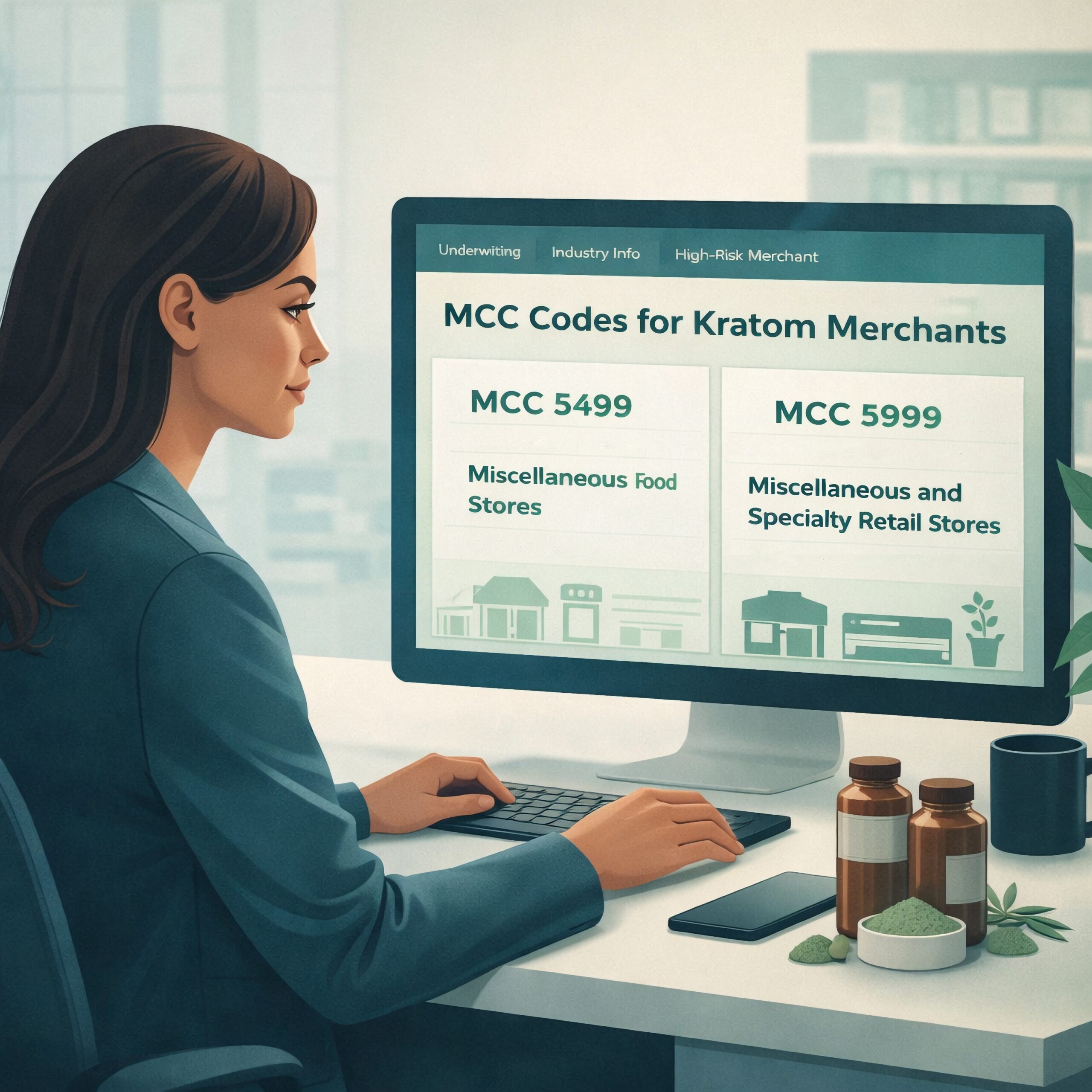
MCC 5499
MCC 5499 is commonly described as Miscellaneous Food Stores or specialty food markets. It can include health food stores and vitamin-oriented retail businesses. For some kratom merchants, especially those positioned closer to botanical or wellness retail, this is one of the more plausible classifications.
MCC 5999
MCC 5999 is generally used for Miscellaneous and Specialty Retail Stores. This is another common landing spot when the processor views the business as a specialty retail operation rather than a narrow supplement category. It is broad, which is exactly why some processors use it.
Other Adjacent MCCs
Some banks may review kratom against adjacent supplement, pharmacy, or drug-proprietary style classifications during underwriting analysis, but that does not mean those are ideal or durable fits. The issue is not just what code a bank might use. The issue is whether the code truly matches how the business operates and how the acquiring bank wants to monitor it.
These examples reflect observed underwriting patterns, not network-mandated kratom classifications. The actual kratom merchant category code can vary by processor, bank, program, and how the business is presented.
That is why the better question is not “What is the kratom MCC code?” The better question is “Which merchant category code can accurately classify kratom for this bank, this processor, and this risk profile?”
Why MCC Classification Matters for Kratom Merchants
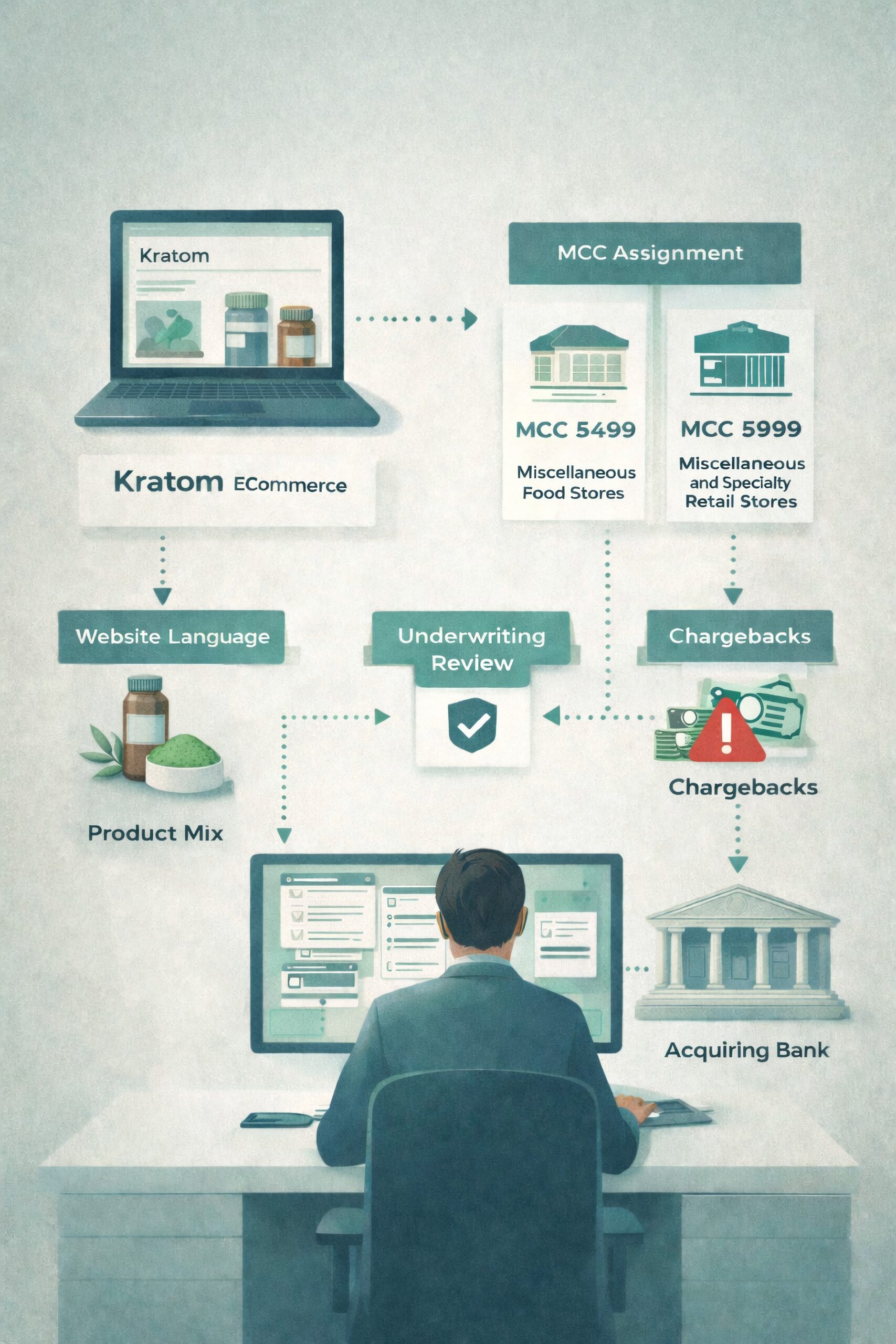
MCC classification affects much more than reporting. It shapes how the business is treated from the first transaction forward.
Approval and Underwriting Fit
Processors do not just underwrite the legal status of kratom. They underwrite the risk associated with the business model, website language, transaction patterns, and business type. If the merchant category code suggests one risk profile while the website suggests another, the underwriter starts seeing inconsistency. That weakens the file.
This is one reason two kratom businesses with similar sales volume can get very different outcomes. One merchant is positioned in a way the bank can classify cleanly. The other creates ambiguity from day one.
Related reading: Kratom Underwriting Guidelines
Processing Cost and Interchange Fees
MCC classifications influence the way fees are assessed across the account. Different merchant category buckets carry different interchange assumptions, different bank pricing expectations, and different levels of risk premium. A merchant pushed into a less compatible high-risk MCC often pays more than a business that is classified accurately from the start.
There is no universal pricing formula by code alone, but in the real world, poor classification often contributes to higher effective fees, additional scrutiny, or both. For high-risk industries, even a 1% to 3% swing in total cost can materially change margins over time.
Related reading: Kratom Merchant Account Fees Guide
Chargeback Monitoring
Banks use MCCs to interpret transaction behavior. If your kratom business is placed in a category with different historical dispute expectations, your chargeback profile can look worse faster. That does not change the actual customer behavior, but it changes how the processor evaluates the account.
For kratom merchants, that matters because dispute review already tends to intensify as ratios climb toward the 0.75% to 1.00% range. If the account is also sitting in a shaky or poorly matched classification, the tolerance window narrows even more.
Related reading: Kratom Chargebacks: How to Protect Your Merchant Account
Long-Term Account Stability
Many merchant accounts do not fail at onboarding. They fail during monitoring. A processor may board the merchant under one classification, then re-review the website, descriptors, or transaction patterns later and decide the account was categorized too loosely. That is when reserve changes, fee increases, or termination notices appear.
Misclassification is one of the hidden paths to termination because the merchant often thinks the account was “approved correctly” already. From the bank’s perspective, approval was based on a classification that no longer feels accurate.
Related reading: Why Kratom Merchant Accounts Get Shut Down
VERIFIED underwriting position: The wrong MCC rarely blocks the first approval. It usually creates the review conditions that damage the account later.
How Banks Actually Classify Kratom
Banks do not classify kratom by reading a single line on the application. They classify kratom by interpreting the merchant through an underwriting lens.
Website Language
Website copy changes classification more than most merchants realize. If the site reads like a specialty botanical retailer, that leads one way. If it reads like a quasi-pharmacy, aggressive supplement marketer, or claims-heavy health brand, it leads another. The underwriter is trying to classify not just the product, but the compliance posture and reputational exposure of the business.
Product Mix
Plain leaf powder and capsules are typically easier to classify than enhanced blends, concentrated extracts, or more aggressive formulations. Once the catalog expands, the business can start looking less like simple specialty retail and more like a harder-to-place high-risk supplement merchant account.
Business Model
One-time retail and subscription billing are not viewed the same way. A processor may classify the same kratom products more conservatively if the merchant account includes continuity billing, recurring revenue, or upsell funnels. That is because those transaction structures tend to create more chargeback risk.
Compliance Signals
Refund policies, age-gating, shipping disclosures, contact information, and clear product labeling all affect how a bank classifies the business. Compliance is not separate from classification. It helps the bank decide whether the merchant belongs in a manageable category or a problematic one.
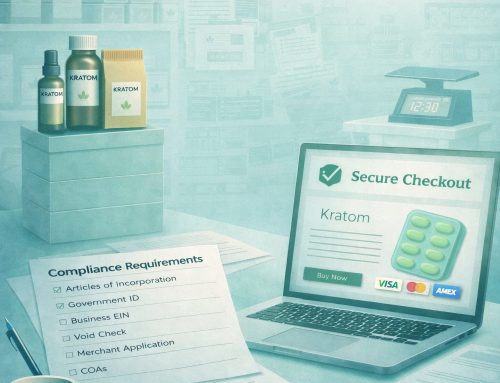
Related reading: Kratom Payment Compliance Checklist
Field Notes: Two kratom businesses can sell nearly identical products and still receive different MCC classifications because one looks organized, transparent, and underwriter-ready while the other looks improvised and harder to defend.
Common MCC Classifications Seen Around Kratom
| MCC | How It Is Commonly Described | Why It May Be Used | Main Risk |
|---|---|---|---|
| 5499 | Miscellaneous food stores / specialty markets | Used when kratom is positioned closer to specialty food, botanical, or health-oriented retail | Still may be challenged if the site looks more aggressive than the code suggests |
| 5999 | Miscellaneous and specialty retail stores | Broad retail fallback when the processor wants a general specialty retail classification | Too much ambiguity can invite later review |
| Other adjacent codes | Supplement, pharmacy, or proprietary-product adjacent buckets | Sometimes considered when the bank is trying to classify a harder file | Poor fit can create pricing pressure or termination risk |
This is why phrases like correct MCC and kratom payment classification matter. The code is not just a label. It determines how the processor sees the business every time card transactions hit the account.
Common Mistakes Merchants Make With Kratom MCCs
“There must be one official kratom MCC code.”
No. That is the central misconception. Kratom is usually classified through broader merchant category structures rather than a dedicated code created specifically for kratom.
“If the processor approved me, the classification must be fine.”
Not necessarily. Approval only means the account was accepted on the file presented at that moment. Many classification problems surface later, after the processor reviews transaction behavior, chargeback trends, or changes in the website.
“A broad code is safer because it gives flexibility.”
Sometimes a broad code like 5999 is workable. Sometimes it is the beginning of future trouble. Broad classifications can help when they are still honest and defensible. They become dangerous when they are simply masking a business the bank would rather classify more tightly.
“Traditional processors will classify kratom fairly if I keep the site simple.”
Traditional processors usually reject or later terminate kratom because the problem is not just page design. The category itself is high-risk. Mainstream payment processors are not built for that kind of underwriting nuance.
VERIFIED underwriting position: A vague classification may speed onboarding, but it also gives the processor more room to challenge the account after volume begins.
How High-Risk MCC Treatment Changes Monitoring
High-risk processing is not just about a higher fee. It also changes how the processor watches the account. Once a kratom business is placed into a more sensitive merchant category, the bank may apply tighter expectations around chargeback ratios, fulfillment quality, refund trends, and sudden changes in sales behavior.
That matters because card network pressure does not reach all MCCs the same way. Banks build internal controls around historical loss patterns, reputational exposure, and how defensible the merchant category looks if the portfolio is reviewed. A kratom processing category that feels borderline or loosely justified can end up drawing faster scrutiny than one that was positioned cleanly from the start.
This is why a merchant can have decent sales, low obvious fraud, and still run into trouble. The account may not be failing because the business is collapsing. It may be failing because the classification told the bank to monitor it like a weaker fit all along.
How VERIFIED Helps Merchants Get the Classification Right
VERIFIED is not a single processor and does not force kratom merchants into one acquiring relationship. We operate as an underwriting-aware high-risk broker with direct relationships across multiple banking and gateway environments.
That matters because classification should be part of placement strategy. A broker who understands how banks use merchant category code logic can help:
- position the business more clearly for underwriting
- reduce the chance of being classified under a poor-fit MCC
- match the merchant account to banks that understand the category
- build toward reliable payment processing instead of fragile approval
For kratom merchants, the real goal is not simply to acquire an account. It is to secure a merchant account that can survive normal business growth without constant fear of review or termination.
Related reading: Kratom Merchant Account & Payment Processing
Next Steps for Kratom Merchants
If you are applying for a new kratom merchant account, reviewing current processing terms, or trying to understand why your processor classified the business the way it did, start with the classification question early. Do not treat it as back-office trivia.
The right kratom merchant category code helps the bank classify the business honestly. The wrong one can distort pricing, trigger compliance friction, and make the account look unstable even when the business itself is not.
Merchants that want stable, reliable payment processing for kratom usually work with a broker like VERIFIED because classification, underwriting, and bank fit all have to line up together.
Further Reading
- Visa Merchant Data Standards Manual
- Mastercard Quick Reference Booklet — Merchant Edition
- Visa Developer MCC Range Reference
Frequently Asked Questions
What is the MCC code for kratom?
There is no single standardized MCC code created specifically for kratom. Processors usually classify kratom businesses under broader retail, specialty food, or supplement-adjacent merchant category code groupings depending on the business presentation and underwriting fit.
Can kratom be classified under MCC 5499 or MCC 5999?
Yes. In practice, some kratom merchants may be placed under broader codes such as MCC 5499 or MCC 5999 when the processor views the business as specialty retail or a food-adjacent botanical seller. These are observed classification patterns, not guaranteed or network-mandated kratom assignments.
Why does the merchant category code matter for a kratom merchant account?
The merchant category code affects underwriting, pricing, interchange assumptions, compliance review, and transaction monitoring. A poor-fit MCC can lead to higher fees, reserve pressure, or later account termination.
Can the wrong MCC code cause a kratom merchant account shutdown?
Yes. If the processor later decides the business was misclassified, the merchant account may be repriced, placed under heavier monitoring, or terminated. Misclassification is a common hidden stability risk in kratom payment processing.
Can a merchant choose its own MCC code?
No. The processor and acquiring bank assign the MCC based on how they classify the business. However, the way the merchant presents its website, products, and compliance posture can strongly influence the outcome.
How does VERIFIED help with kratom MCC classification?
VERIFIED helps merchants position the business correctly before underwriting and matches them with acquiring banks that understand the category. That reduces the chance of poor-fit classification and improves long-term processing stability.

Let us discover your best options.
Either submit the form below or get in touch with an agent now (415) 835-4135.
Applying is risk-free; we send your details to underwriters to find the best fit and contact you with the best option or request more details, with no credit checks or commitments.