
Written by VERIFIED Credit Card Processing | High-Risk Payments Specialist
High-risk ecommerce merchants are operating in a tightening environment. Payment processors are enforcing acceptable use policies more aggressively, sponsor banks are narrowing category exposure, and cross-border underwriting friction is increasing. If your merchant account was not approved—or your payment gateway shut down your account—the issue is rarely random. It is structural.
Payment continuity is no longer optional for certain ecommerce categories. It must be engineered.
Last Updated: March 2026
Key Highlights
- High-risk payment alternatives require layered architecture—not single-processor reliance.
- Merchant account denials are driven by underwriting risk factors, not just legality.
- WooCommerce high-risk payment solutions depend on routing structure and risk compatibility.
- Infrastructure-based routing enables payment continuity when traditional underwriting is unavailable.
- VERIFIED operates as a multi-bank broker focused on long-term stability—not short-term approvals.
Direct Answer: What To Do If Your Merchant Account Isn’t Approved
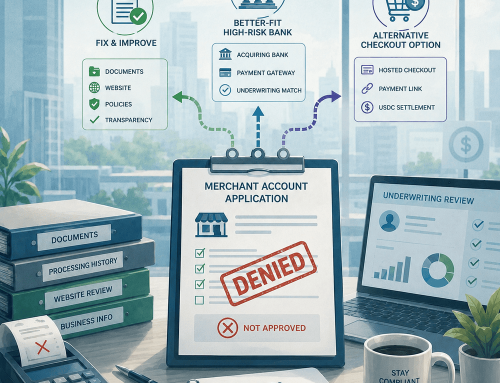
If your merchant account is not approved, you need to shift from searching for a single replacement processor to designing a structured payment strategy. That typically includes:
- Multi-bank underwriting evaluation instead of relying on one provider
- Specialty or offshore placement where appropriate
- Infrastructure-based routing to maintain payment continuity
A high-risk payment alternative is any processing structure that allows a merchant to accept payments when traditional acquiring bank underwriting is unavailable or unstable.
Why High-Risk Merchants Get Declined or Shut Down
MCC Classification (Merchant Category Code)
MCC classification determines how a business is categorized within the card networks. Certain categories are inherently flagged as higher risk based on historical fraud and chargeback data.
Product Ambiguity
Novel supplements, peptides, and emerging products often exist in regulatory gray areas. Even when lawful, ambiguity increases perceived underwriting risk.
Chargeback Exposure
Banks monitor dispute velocity because it predicts future fraud exposure. Elevated chargeback ratios reduce approval probability and trigger account reviews.
Regulatory Volatility
Categories subject to shifting compliance expectations create forward-looking risk for acquiring banks.
Cross-Border Complexity
International ecommerce introduces jurisdictional and fraud complexity, further tightening underwriting tolerance.
Identity Logic & Behavioral Risk Signals
Modern underwriting systems use real-time behavioral analysis to detect fraud patterns. Accounts can be flagged based on activity signals—not just individual transactions—leading to sudden reviews or shutdowns.
Underwriting is the process by which acquiring banks evaluate a merchant’s risk profile before granting access to card networks.
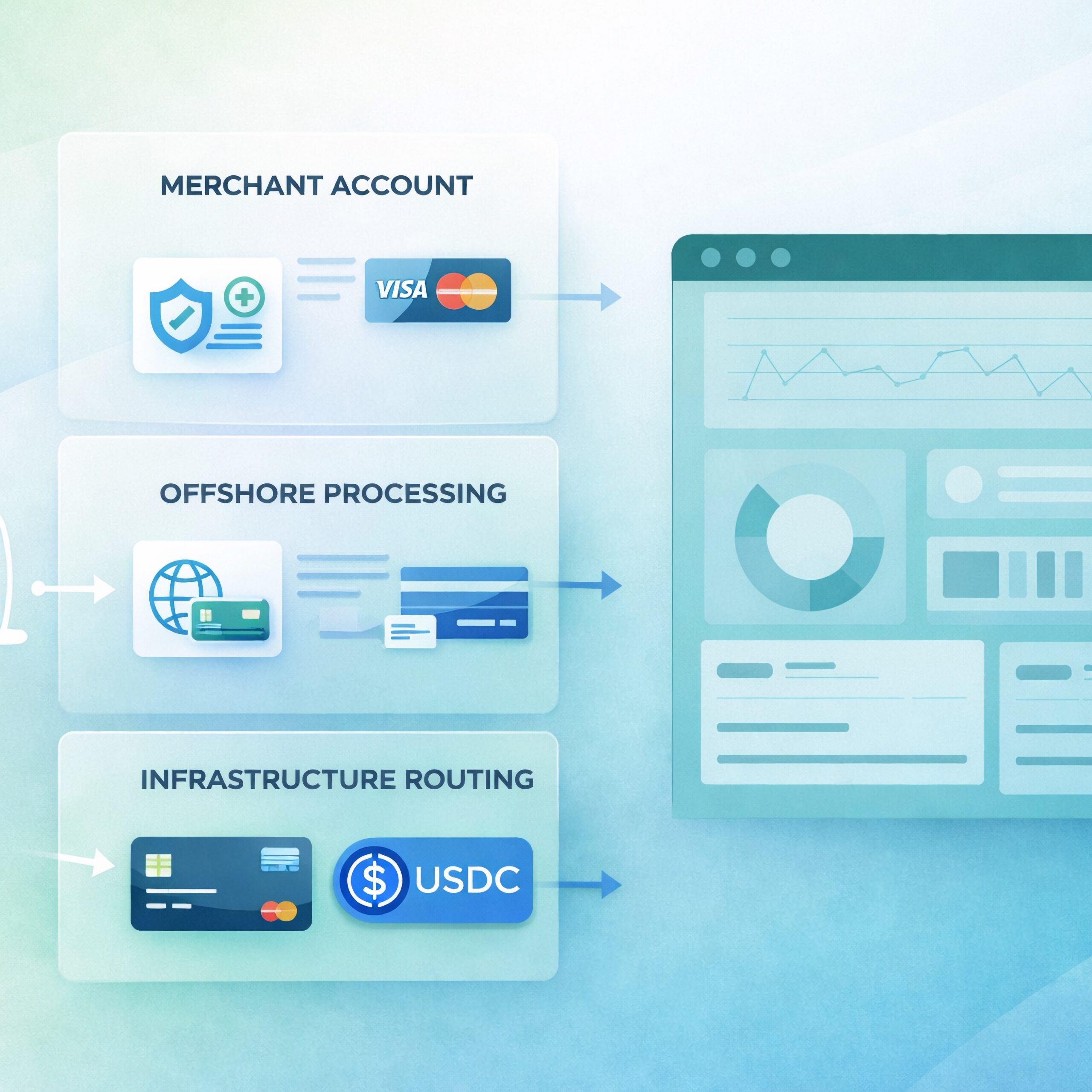
The Three-Layer Payment Strategy for High-Risk Merchants
This layered model reflects how high-risk merchants maintain payment continuity in real-world conditions. It is also a form of payment orchestration, where multiple processing paths are used to reduce single points of failure.
| Layer | Structure | Speed | Cost | Stability |
|---|---|---|---|---|
| Layer 1 | Domestic Merchant Account | Standard | Lowest | Highest (if approved) |
| Layer 2 | Offshore / Specialty Processing | Moderate | Higher | Variable |
| Layer 3 | Infrastructure-Based Routing | Fast | Moderate | High (as continuity layer) |
Layer 1: Domestic Underwriting Placement
- Dedicated merchant account (MID)
- Lower long-term processing costs
- Structured risk monitoring
- Most stable option when properly matched
Compatibility beats approval.
Layer 2: Offshore or Specialty Underwriting
- Higher tolerance for high-risk industries
- Higher fees and reserves
- Greater operational variability
Layer 3: Infrastructure-Based Routing
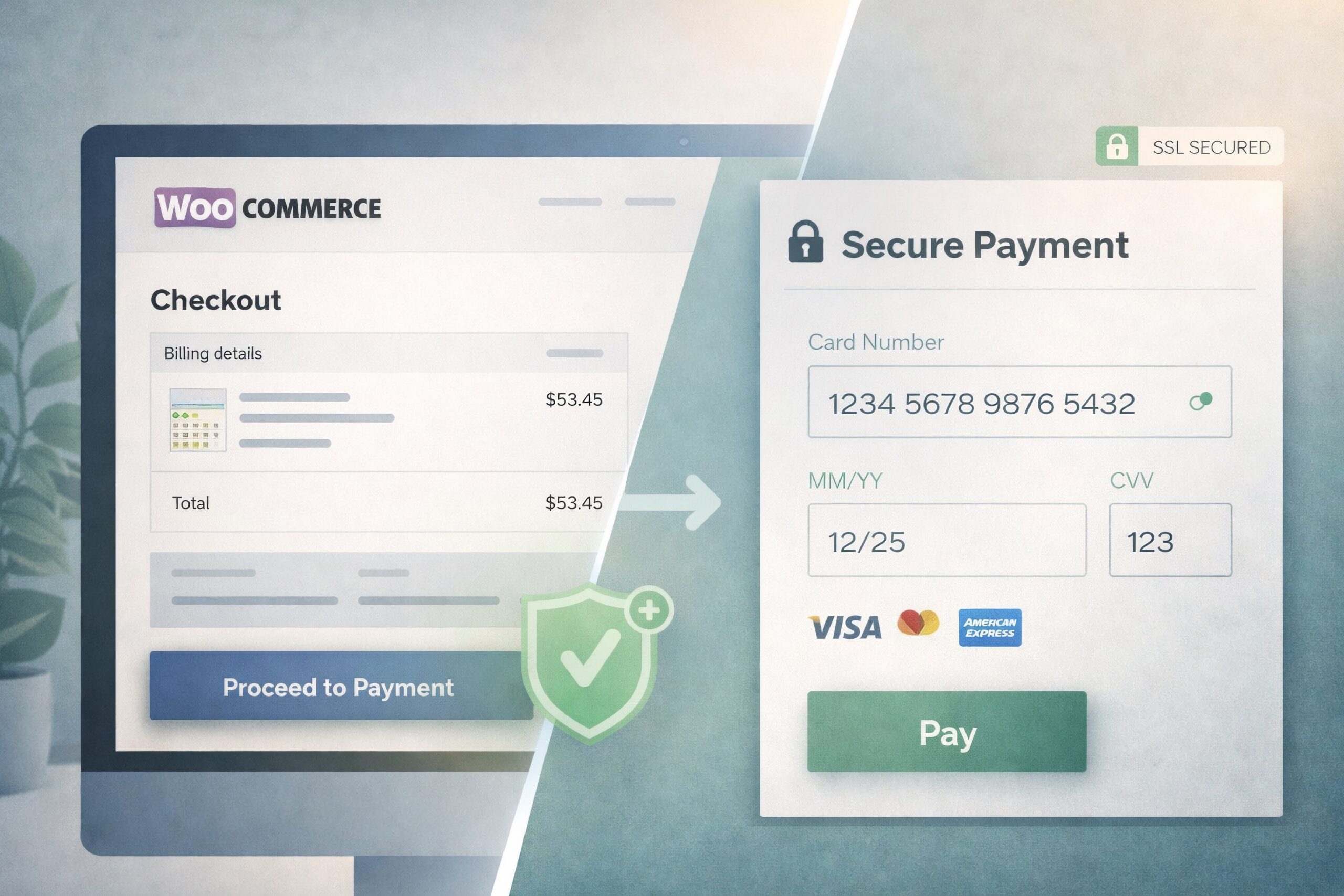
When traditional underwriting is unavailable, merchants may use infrastructure-based routing models that convert card transactions into alternative settlement rails.
Card-to-crypto checkout is a payment architecture where a customer pays by card and the merchant settles in a digital asset such as USDC.
In practice, this routing layer integrates directly with WooCommerce and allows merchants to maintain checkout functionality without relying solely on traditional acquiring banks.
VERIFIED Crypto Checkout was built to provide this infrastructure layer for WooCommerce merchants operating in underwriting-restricted categories. You can review the card-to-crypto WooCommerce integration here. This plugin or API can be up and running in minutes.
These systems rely on regulated on-ramp providers that enforce identity verification and compliance controls aligned with financial regulations.
Settlement architecture changes risk exposure.
How Infrastructure-Based Routing Works
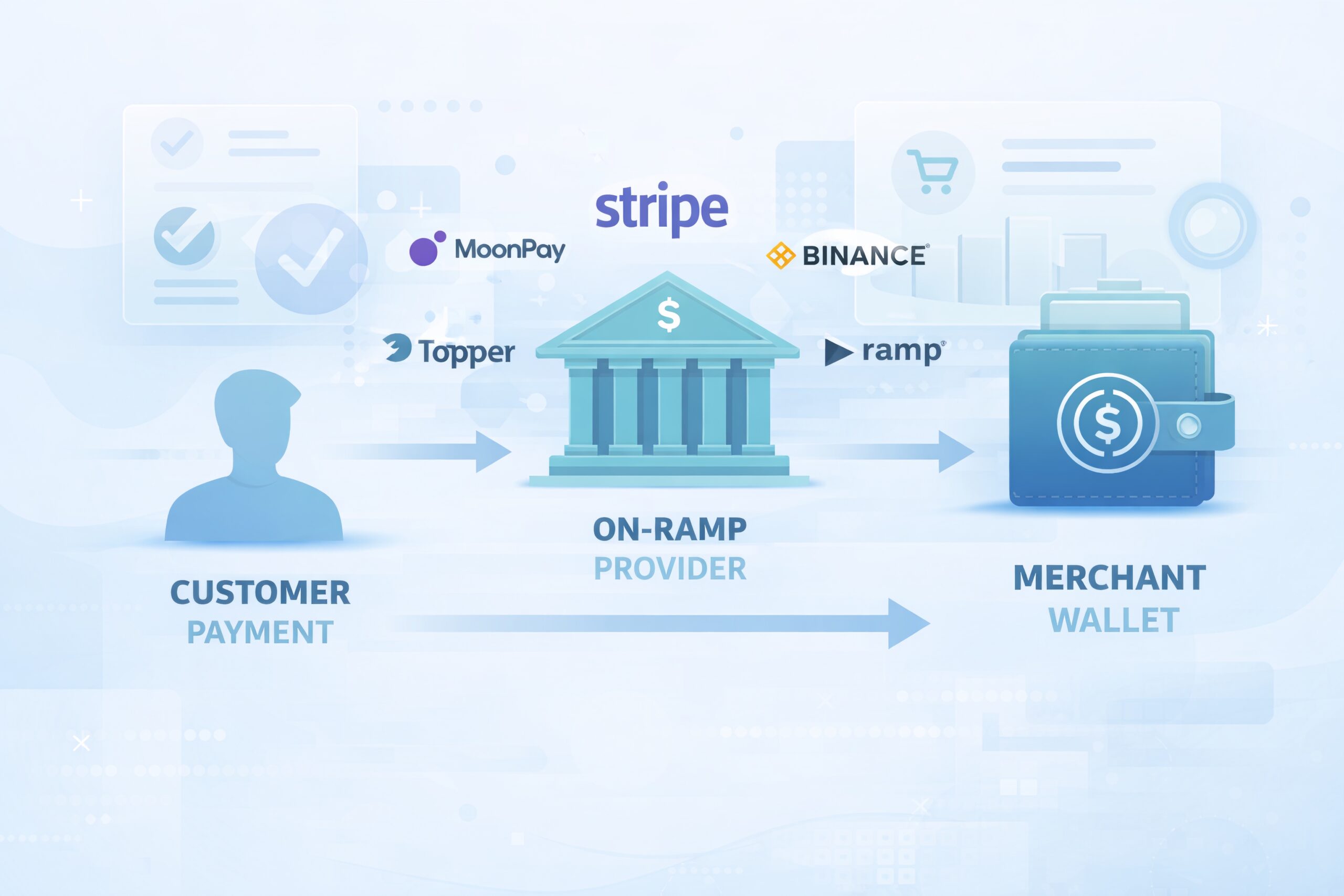
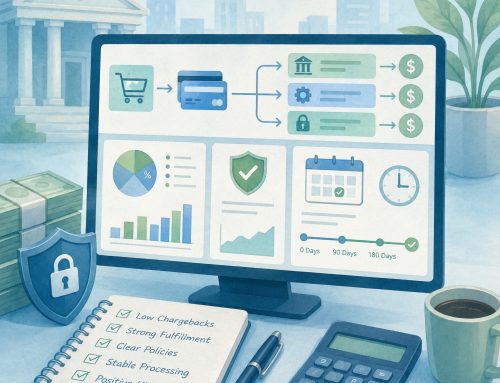
- Customer enters card details at checkout
- Payment is routed through a regulated on-ramp provider
- Funds convert into a digital asset such as USDC
- Settlement is delivered to the merchant wallet
Infrastructure-based routing processes card payments while settling merchants through alternative rails rather than traditional acquiring bank deposits.
Field Notes: Operational Reality
Over the past year, many supplement and research-driven ecommerce merchants have experienced approvals followed by rapid shutdowns due to upstream bank pressure. Merchants without a secondary payment layer were forced offline immediately, while those with diversified routing maintained continuity.
Redundancy determines survival.
When This Approach Makes Sense
- Merchant account not approved by multiple providers
- Payment processor shutdown or account termination
- Cross-border ecommerce restrictions
- Need for a backup payment solution
When It Does NOT Make Sense
- Low-risk businesses eligible for stable domestic merchant accounts
- Merchants requiring full traditional reporting structures
- Businesses prioritizing lowest processing costs over flexibility
Not every merchant should use this model.
Payment Continuity Is a Strategy
Many high-risk merchants search for a Stripe alternative or a new payment processor after a shutdown. The more important shift is structural.
High-risk payment processing requires layered architecture:
- Primary merchant account (when available)
- Secondary routing infrastructure
- Ongoing risk monitoring
Checkout design impacts conversion more than payment method.
VERIFIED Ecosystem Positioning
VERIFIED Crypto Checkout operates as part of a broader VERIFIED ecosystem.
For merchants that may still qualify for a high-risk merchant account, VERIFIED Credit Card Processing evaluates underwriting placement first and infrastructure routing second.
This ensures merchants are not defaulting to alternative payment models when a more stable structure is available.
Next Steps
If your merchant account was not approved or your payment gateway shut down your account, you can review the infrastructure-based routing option here.
If your business may qualify for traditional underwriting, that path should be evaluated first.
Payment continuity should be designed—not improvised.
Frequently Asked Questions
What is a high-risk payment alternative?
A high-risk payment alternative is a processing structure used when traditional merchant accounts are unavailable or unstable, including specialty underwriting or infrastructure-based routing models.
Why was my merchant account not approved?
Merchant accounts are declined due to risk factors such as chargebacks, product category, regulatory uncertainty, and underwriting thresholds set by acquiring banks.
Can I accept credit card payments without a merchant account?
Some merchants use infrastructure-based routing models that process card payments and settle through alternative rails such as digital assets, but compliance requirements still apply.
What is infrastructure-based payment routing?
It is a payment architecture where transactions are processed normally but settlement occurs through alternative systems rather than traditional bank deposits.
Is this a replacement for traditional payment processing?
No. For most businesses, this model is best used as a backup or continuity layer rather than a primary replacement.
Let us discover your best options.
Either submit the form below or get in touch with an agent now (415) 835-4135.
Applying is risk-free; we send your details to underwriters to find the best fit and contact you with the best option or request more details, with no credit checks or commitments.