
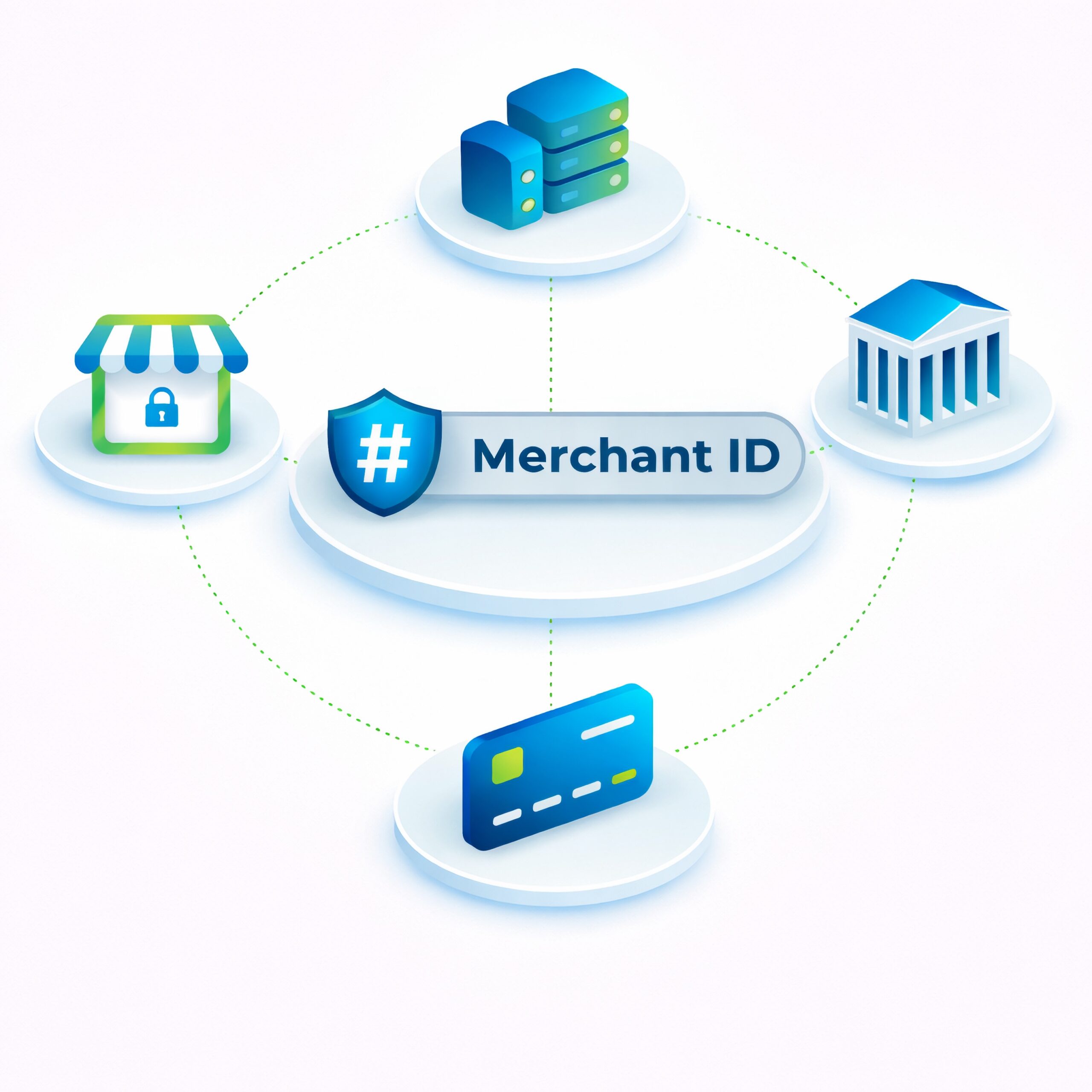
What is a merchant ID? A Merchant Identification Number (MID) is a unique identifier assigned to a business by an acquiring bank (or its processing partner) when a merchant account is approved. Every card transaction includes the MID so banks, card networks, and processors know which merchant initiated the charge and where funds should be deposited.
In simple terms: an MID is your business’s unique ID number in the card payment system, assigned by a bank when you open a merchant account.
If you accept card payments — or you’re evaluating alternatives to platforms like Stripe or PayPal — understanding what an MID is (and whether you truly have one) is a big part of long-term payment stability, especially for higher-risk industries.
- An MID is a bank-issued identifier tied to a true merchant account
- Most payment aggregators do not give businesses their own MID
- Dedicated MIDs provide greater stability, control, and accountability
- High-risk businesses typically need a dedicated MID to process reliably
- VERIFIED Credit Card Processing helps merchants get placed with the right bank or processor for their risk profile
Merchant Identification Numbers Explained
A Merchant Identification Number — often called a merchant ID or merchant number — is a unique numeric code assigned to your merchant account by an acquiring bank. It functions as your business’s identity inside the card payment ecosystem.
Every time a customer’s card is charged, the MID helps card networks and banks:
- Identify which business initiated the transaction
- Route the transaction through the correct acquiring relationship
- Settle approved funds to the correct merchant account
Important distinction: some platforms display an internal “merchant ID” inside their dashboard, but that identifier is not always a bank-issued MID recognized across the card networks.
Merchant ID vs Terminal ID (MID vs TID)
A merchant ID is sometimes confused with a terminal ID (TID). The MID identifies the merchant account at the bank level, while a TID identifies a specific payment terminal or device used to submit transactions. A single merchant account can have one MID but multiple TIDs.
If you already have a merchant account, you can usually find your merchant ID on your merchant account statement, inside your payment processor dashboard, or by contacting your merchant account provider directly.
How an MID Works During a Credit Card Transaction
When a customer submits a card payment, transaction data flows through the gateway, processor, acquiring bank, card network, and the issuing bank. Your MID travels with the transaction from start to finish.
- Authorization: The MID identifies the merchant requesting approval
- Settlement: Approved funds are routed to the merchant account linked to that MID
- Reporting: Sales, refunds, and fees are tracked per MID
- Disputes: Chargebacks and retrievals are assigned to the MID involved
For a practical overview of how gateways fit into this flow, see Understanding Payment Gateways.
If you’re processing on an aggregator today or you’re in a higher-risk category, it’s worth confirming whether you qualify for a true, bank-issued MID. See if you qualify for a merchant account.
Why Merchant IDs Matter for Payments, Reporting, and Risk
An MID is more than a technical detail — it directly affects how your business is evaluated, monitored, and supported by banks.
- Accurate fund routing: Ensures deposits reach the correct business bank account
- Clear accountability: Creates a clean audit trail for transactions
- Risk isolation: Your risk is evaluated on your own activity, not someone else’s
- Dispute monitoring: Chargeback ratios and fraud patterns are measured per MID
Because dispute ratios are tracked at the MID level, protecting that MID matters. If you want a practical overview of dispute prevention systems, read Understanding Chargeback Alerts.
MID vs Payment Aggregators (Stripe, PayPal, Square)
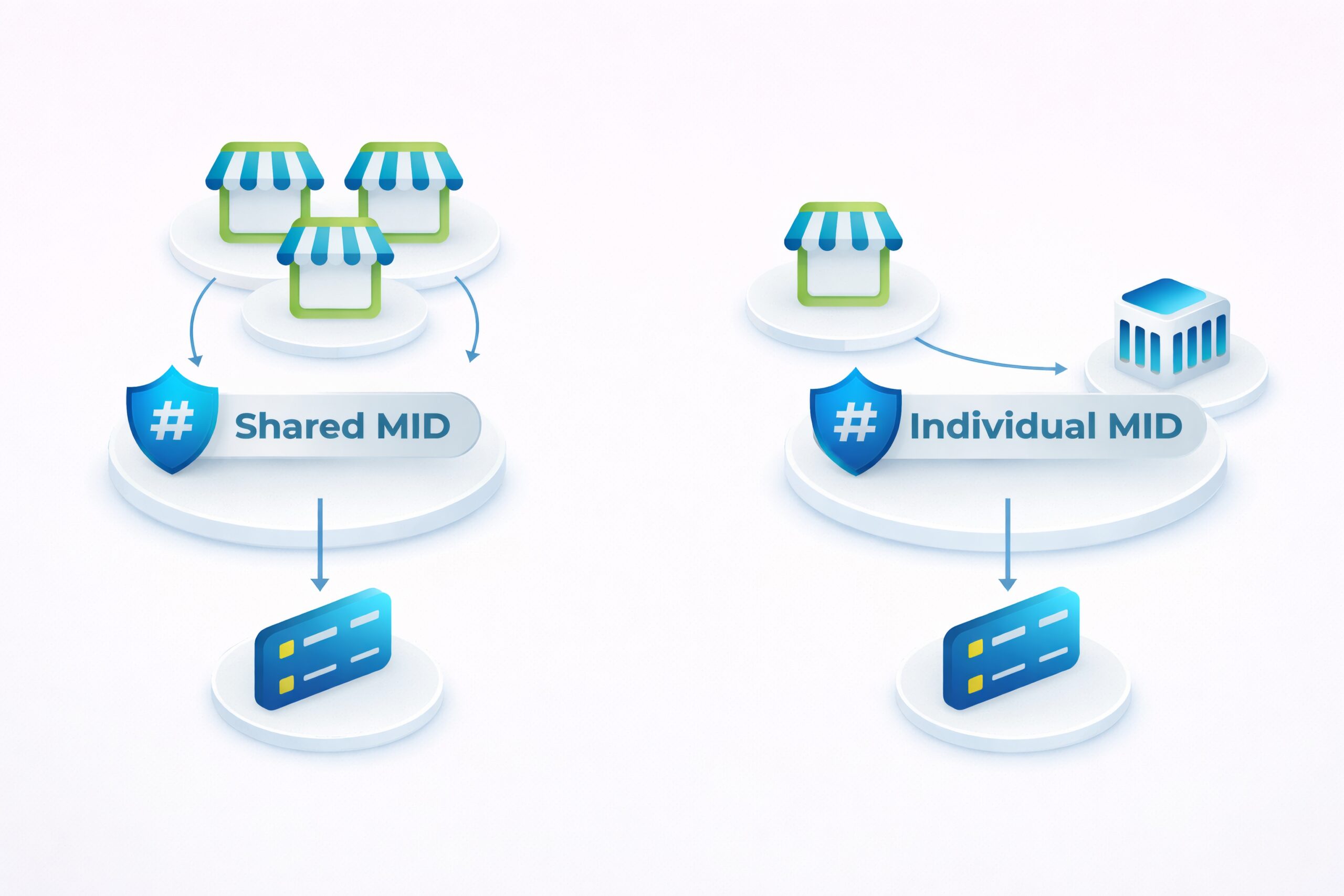
Many popular platforms operate as payment aggregators (often called PayFacs). Examples include Stripe, PayPal, Square, and Shopify Payments. These platforms act as the merchant of record with the acquiring bank.
This is the core distinction merchants should understand: merchant account vs payment aggregator. A dedicated merchant account is underwritten for your specific business and issues you a bank-recognized MID, while an aggregator typically routes you under its master MID.
Without a merchant ID, businesses are generally operating under a shared aggregator structure, which limits control and increases dependency on platform-level policies.
Square merchant account vs MID: Square can be convenient for simple, low-risk use cases, but it generally operates under an aggregator model. Merchants that need a dedicated, bank-issued MID often require a fully underwritten merchant account for long-term stability.
Related reading: Stripe or Square, our Stripe Alternative guide, and Shopify Payments for High-Risk Businesses.
How Businesses Get a Merchant ID
The only way to obtain a bank-issued MID is to open a merchant account through an acquiring bank or a provider that places merchants directly with acquiring partners.
How to get a merchant ID
- Business formation and tax documentation
- Owner identification and KYC verification
- Recent bank statements and processing history (if applicable)
- Website review for policies, disclosures, and product clarity
- Risk details such as average ticket size and fulfillment timelines
How long does it take to get an MID? Low-risk merchants may be approved in days, while higher-risk businesses often take one to three weeks due to deeper underwriting.
VERIFIED Credit Card Processing works as a high-risk payment processing broker, partnering with multiple acquiring banks to place merchants based on fit. Apply for payment processing to see if you qualify.
Can a Business Have More Than One MID?
Yes. Businesses may have multiple MIDs for legitimate operational reasons such as separate sales channels, legal entities, or currencies. All MIDs must be disclosed and structured properly to remain compliant.
Merchant IDs for High-Risk Businesses
High-risk industries such as CBD, supplements, adult content, travel, and subscription models face stricter underwriting and are often restricted on aggregator platforms.
Do high-risk businesses need an MID?
In most cases, yes. A dedicated MID allows banks to monitor risk at the merchant level and is often required for long-term processing stability.
Learn more about high-risk merchant accounts and industry-specific solutions like CBD merchant accounts.
Using Your MID to Build Long-Term Payment Stability
Merchants that protect their MID tend to experience fewer disruptions and more flexibility as they scale.
- Keep chargebacks under ~0.9%
- Use clear billing descriptors
- Set realistic fulfillment expectations
- Communicate major changes proactively
- Use prevention tools early
What is A Merchant ID Frequently Asked Questions
Is an MID the same as a merchant account?
No. An MID is the identification number assigned to a merchant account by an acquiring bank. The merchant account is the underlying bank relationship; the MID is the identifier tied to it.
Do Stripe or PayPal give you a merchant ID?
Generally no. Platforms like Stripe and PayPal operate as payment aggregators, so businesses typically use the platform’s master MID rather than receiving their own bank-issued Merchant Identification Number.
Can a business have multiple MIDs?
Yes. Businesses may have multiple MIDs for different sales channels, locations, entities, or currencies, as long as they are disclosed and structured correctly.
Do high-risk businesses need a dedicated MID?
In most cases, yes. Many high-risk businesses are restricted on aggregators and require a dedicated merchant account with its own MID issued by a bank willing to underwrite the industry.
How long does it take to get a merchant ID?
Timelines vary by risk profile and documentation. Low-risk businesses may be approved in days, while high-risk merchants often take one to three weeks due to additional underwriting.


Let us discover your best options.
Either submit the form below or get in touch with an agent now (415) 835-4135.
Applying is risk-free; we send your details to underwriters to find the best fit and contact you with the best option or request more details, with no credit checks or commitments.